TL;DR: Swamp Cooler Float Valve
- A swamp cooler float valve controls the water level inside your unit
- If it fails, you can get overflow, poor cooling, or pump damage
- Most issues come from mineral buildup, wear, or misalignment
- Adjusting or replacing it is usually simple and inexpensive
- Regular maintenance prevents bigger, more expensive problems
Most swamp cooler problems are not big, complicated failures. They are small parts doing their job poorly.
This is one of them.
A $15–$40 component can be the difference between a house that stays cool all summer and one that turns into a frustration the moment temperatures spike. That component is the swamp cooler float valve. And when it fails, things go sideways fast. Water spills. Cooling drops off. Or worse, your system quietly underperforms while your energy bills climb.
I have seen it happen plenty of times. Homeowners assume the entire system is failing when in reality, the issue comes down to water level control.
Evaporative coolers only work when water flow is consistent. Not close. Not “good enough.” Consistent. And that is exactly what the float valve is responsible for.
In this guide, we are going to break it down clearly. What a swamp cooler float valve actually does. How it works. What goes wrong. And what you can do about it before it turns into a bigger issue. If you want your cooler running reliably through a Colorado summer, this is one of the simplest places to start.
What Does a Float Valve Do in a Swamp Cooler?
A swamp cooler float valve controls the water level inside your cooler.
That is its only job. But it is a critical one.
Inside your evaporative cooler is a reservoir, often called the pan. This is where water collects and gets pumped over the swamp cooler pads. The float valve makes sure that water level stays consistent.
If the water level drops, the valve opens and lets more water in. If the water level rises to the correct height, the valve shuts off.
Think of it like the system that fills a toilet tank. Same concept, just applied to your cooling system.
The float valve is essential for stable operation. Without it, the system cannot regulate itself.
How a Swamp Cooler Float Valve Works
The mechanism is simple. That is part of why it is so reliable and so common.
The Basic Components
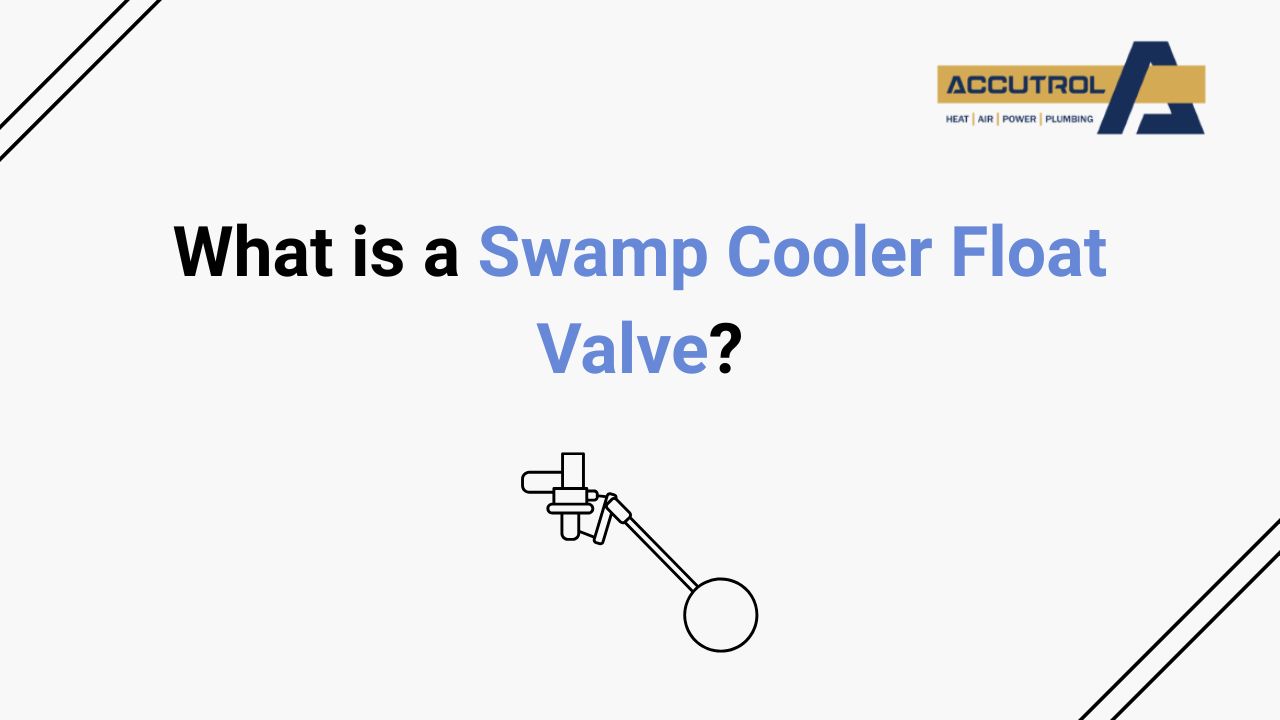
A typical swamp cooler float valve includes a float, usually a plastic or metal ball, a float arm, and a valve connected to the water supply line.
The Process
Here is what happens step by step.
Water enters the cooler pan. The float rises as the water level increases. When the float reaches a set height, it pushes the valve closed. Water stops flowing. As water is used and evaporates, the level drops. The float lowers and reopens the valve.
It is a continuous cycle that keeps your cooler running properly.
This system is often compared to a toilet float because it is easy to visualize.
Why the Float Valve Is Critical to Your Cooler
It might be a small component, but it protects the entire system.
Prevents Overflow
If the float valve fails to shut off, water keeps flowing. This can lead to water spilling out of the unit, roof or siding damage, and wasted water.
Protects the Pump
If the valve fails to open, the water level drops too low. The pump may run dry, internal components can overheat, and you risk premature system failure.
Maintains Cooling Performance
Swamp coolers rely on proper water distribution across the pads.
Too little water leads to weak cooling. Too much water can reduce efficiency and create uneven airflow.
Consistent water level equals consistent cooling.
Where the Float Valve Is Located
You will find the swamp cooler float valve inside the unit, near the bottom.
Typical Location
It is mounted through the side wall of the cooler, connected to the incoming water line, and positioned above the water pan.
If you remove the side panel of your cooler, it is usually easy to spot.
The float will be sitting on the water surface, moving up and down as the level changes.
Signs Your Swamp Cooler Float Valve Is Failing
Float valve problems are common, especially in areas with hard water like Colorado.
Here are the most common warning signs.
Water overflowing from the unit usually means the valve is not shutting off properly.
No water entering the cooler often means the valve is stuck closed or blocked.
Constant running water is a sign the valve is not sealing.
Inconsistent water levels can mean the float is misaligned or sticking.
Homeowners often notice symptoms before they understand the cause.
Common Float Valve Problems and Causes
Let’s break down why these issues happen.
Mineral Buildup
Hard water leaves deposits on the valve and float. This can cause sticking, poor sealing, and restricted movement.
Misalignment
The float arm can get bent or installed incorrectly. This affects how the valve opens and closes.
Wear and Tear
Over time, internal components degrade. Seals can wear out and stop functioning properly.
Debris in the Valve
Sediment from the water supply can block the valve and prevent proper flow control.
Maintenance-focused content stresses regular inspection for this reason. These problems are predictable and preventable.
How to Adjust a Swamp Cooler Float Valve
Adjustment is often all you need to fix minor issues.
Goal
Set the water level so it sits just below the overflow line.
Basic Adjustment Steps
Turn off the water supply. Locate the float arm. Gently bend the arm up or down. Bend down to lower the water level and bend up to raise it. Turn the water back on and test.
Make small adjustments and check the result.
Adjustment is a normal part of installation and maintenance.
How to Replace a Swamp Cooler Float Valve
If adjustment does not solve the problem, replacement is usually straightforward.
Tools You May Need
You may need a wrench or pliers, a replacement float valve, and Teflon tape.
Basic Replacement Process
Turn off the water supply. Disconnect the water line. Remove the old float valve. Install the new valve through the cooler wall. Reconnect the water line. Turn the water back on. Adjust the float to the proper level.
Many homeowners can handle this on their own.
That said, if you are unsure or dealing with multiple issues, calling a swamp cooler professional is the safer route.
Float Valve Maintenance Tips
Regular maintenance helps you avoid emergency cooling repairs.
Inspect at the start of each season and look for corrosion, buildup, and sticking movement.
Clean mineral deposits using a mild cleaner or vinegar solution.
Test the shutoff function by letting the cooler fill and watching the valve stop water flow.
Replace the valve when needed before it fails.
Small checks like this prevent bigger problems later.
Final Thoughts: What is a Swamp Cooler Float Valve
The swamp cooler float valve is simple, but it plays a critical role in how your system performs.
It controls water levels, protects key components, and keeps your cooling consistent when temperatures rise. When it works, you never think about it. When it fails, the problems show up quickly.
The good news is that most float valve issues are easy to catch and even easier to fix. A quick adjustment, a basic replacement, or routine maintenance can prevent overflow, improve cooling performance, and extend the life of your system.
If you want fewer surprises and more reliability, this is one of the first components worth paying attention to.
FAQ: Swamp Cooler Float Valve
What is a swamp cooler float valve?
A swamp cooler float valve is a device that controls the water level inside your evaporative cooler. It opens to let water in when levels are low and shuts off when the correct level is reached.
How do I know if my swamp cooler float valve is bad?
Common signs include water overflowing, no water entering the unit, constant running water, and inconsistent cooling performance.
Can I adjust a swamp cooler float valve myself?
Yes. Most float valves can be adjusted by gently bending the float arm to change the water level. Always make small adjustments and test.
How long does a swamp cooler float valve last?
It depends on water quality and maintenance. In areas with hard water, they may need replacement every few years.
Is replacing a float valve difficult?
Not usually. It is considered a simple repair for many homeowners. However, professional installation ensures proper setup and prevents future issues.
Can Accutrol Complete Home Services repair a swamp cooler float valve?
Yes. We at Accutrol Complete Home Services can diagnose and repair float valve issues as part of a full swamp cooler service.
Does Accutrol replace swamp cooler float valves?
Yes. If your float valve is worn or failing, our technicians can replace it and properly adjust the system for optimal performance.
Why should I hire Accutrol instead of fixing it myself?
Many homeowners can handle simple adjustments. But if you want accurate diagnosis, proper installation, clean professional service, and no guesswork, working with a company like Accutrol helps ensure the job is done right the first time.
Does Accutrol offer maintenance for swamp coolers?
Yes. Preventative maintenance includes inspecting components like the float valve, cleaning buildup, and ensuring your system runs efficiently all season.
Can Accutrol help prevent future swamp cooler problems?
Absolutely. Our approach focuses on proactive system care, which helps reduce breakdowns, improve performance, and extend the life of your equipment.